Reviewed by Sergey Raiter, DOMP, RMT, Manual Osteopathic Practitioner and certified Level 3 Neurokinetic Therapy practitioner.
Massage feels good, and two days later the back pain is back. Sergey Raiter, manual osteopath at Orthosports in Calgary, hears this every week. He does not treat it with more massage. He treats it like a mechanical problem with a cause that can be found. We asked him how.
Who he is
Sergey Raiter, DOMP, RMT, is the founder of Orthosports in Calgary. He is a designated Manual Osteopathic Practitioner, Certified Orthopedic Massage Therapist and Level 3 Neurokinetic Therapy (NKT) practitioner, trained under Massage Hall of Fame inductee James Waslaski. Since 2017 he has focused on assessment-led treatment for recurring back, hip and joint pain.
“I am 100% treatment. If you want maximum results, NKT is the way to go.”
Why does the pain come back after a massage?
This is the question Sergey hears most. His answer is short: massage was never designed to fix the cause.
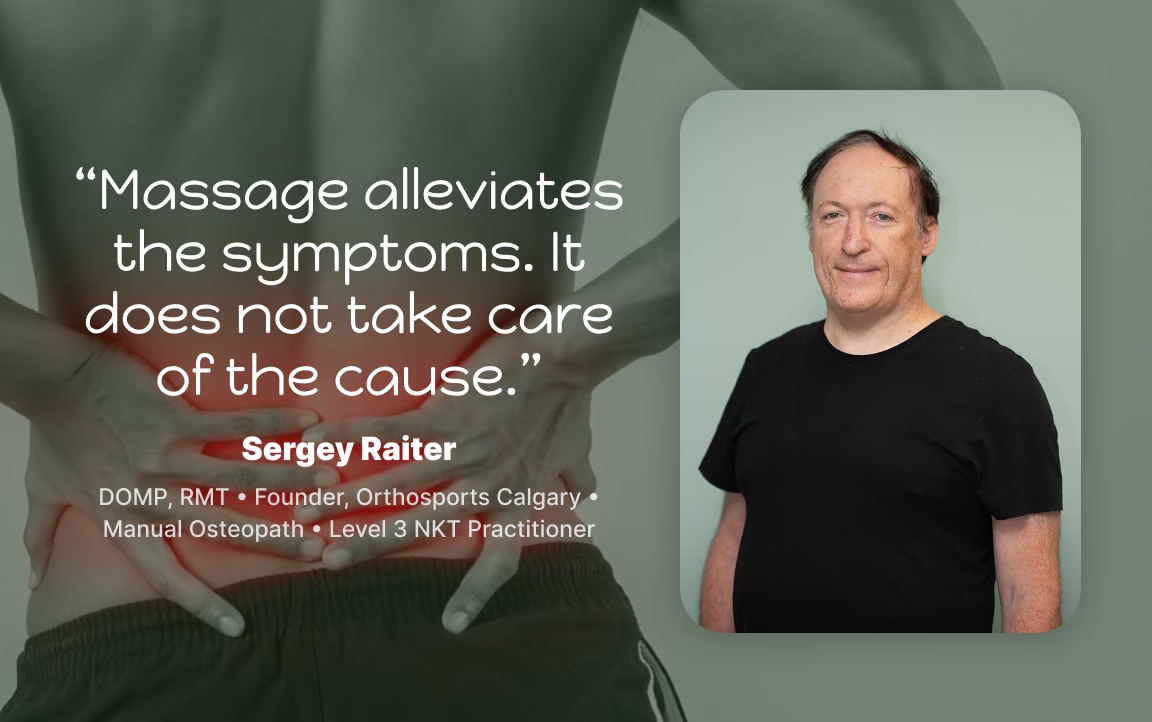
“Deep tissue massage is designed to alleviate the symptoms. It does not take care of the cause. For that reason, the pain always comes back. You get relief for two days, then you go back to pain again.”
The cause, in most of his lower back cases, is not dramatic.
“Most of the time it is too much sitting. In more advanced cases it can be an untreated surgical scar, a herniated or bulging disc, psychological trauma, or a lifestyle that keeps damaging the body.”
If massage feels good, why not just keep doing it?
Sergey does not argue that massage feels bad. He argues it solves a different problem.
“If you take your car to a mechanic and he says your fan is broken, you fix the fan. You do not ask him to polish the car. If you have a specific problem, you come to fix it.”
His own practice reflects that. He estimates he has done one relaxation massage in the last seven years.
“It may have some benefit, but it is not as effective as NKT. I am 100% treatment. No rubbing at all.”
What is NKT, and what does he actually check?
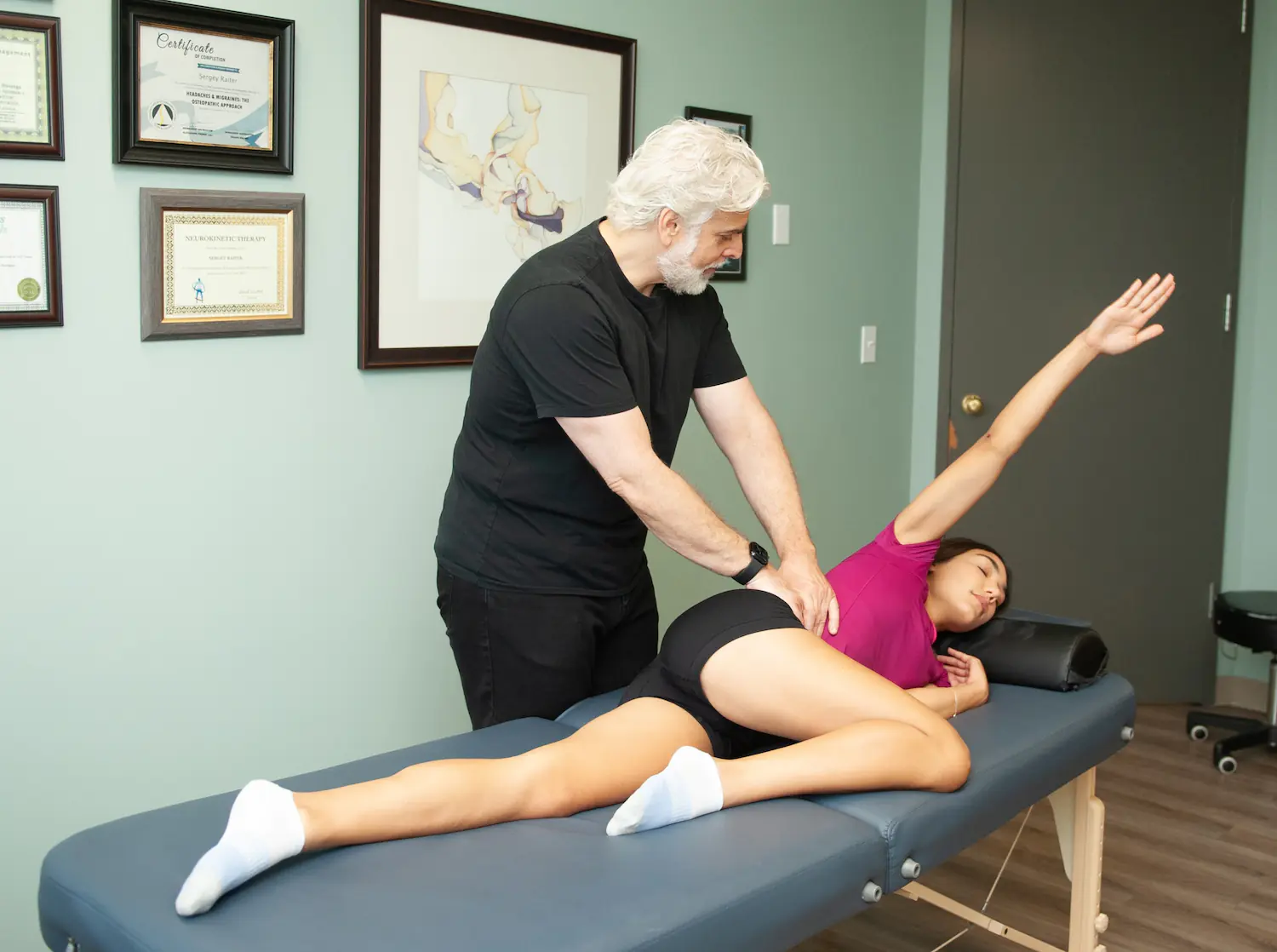
Neurokinetic Therapy (NKT) tests how muscles work together. The goal is to find the muscles that are doing too much, the ones doing too little, and the pattern that keeps putting stress on the painful area.
The first test is simple.
“In NKT we use perturbations. We gently push people back and forward to see how stable they are. It also tells me which muscles are dominant. If someone uses their erectors a lot, I know where to place extra focus.”
Assessment and treatment happen in the same visit. For Sergey, they never fully separate.
“The assessment never ends. I keep muscle testing and releasing trigger points as I go. You are always learning about the body while you treat it.”
Can the assessment change the plan completely?
One case he describes: a woman who had been in a wheelchair for three years. Someone stole her purse, she chased him, tripped, hit her head and broke her wrist.
“I could not push her, so first I made sure there was no spinal damage. Then I did manual tests. I found that her left wrist was compensating for her right hip, and that hip was causing her major pain. At the end of the second session she could walk with some help.”
How many sessions does it take?
Fewer than most people expect.
“In most cases I finish the job in two sessions. Often the pain is gone after the first one.”
Complex conditions, or a job or hobby that keeps recreating the problem, need more: weekly visits until the client feels better, then monthly maintenance.
Sometimes one session is enough, even after years of pain. A recent client found Orthosports on Google.
“He had a motorcycle accident 10 years ago. For 10 years he was in pain. After one session, the pain was gone. With NKT you can get this type of result. With massage you just get relief for two days.”
Some patients are pain-free after one session and never need to come back. For Sergey, that is bittersweet: the best outcome for the patient, and often the last time he sees them.
He does not sell packages either. Most clients prefer to try one session first, and many do not know what their insurance covers.
Is there anything he cannot fix?
Yes, and he names it.
“I had a client who did a lot of cycling, and the way she was cycling was triggering her back pain. She was reversing the problem faster than I was making it better. Nothing will help in that case until the habit changes.”
When there is no improvement, he steps back.
“I always reassess. I look at range of motion, strength and stability. If nothing improves, it is time to look at the general situation, and even refer them out.”
Does more pain mean a better treatment?
No.
“Pain needs to be controlled. If the client is in too much pain, it is time to back off. Communication is the key.”
Soreness afterward depends on age. Clients under 30 usually feel no soreness at all, just better within a couple of days.
His advice between visits is not what most people expect from a manual therapist.
“Increase collagen intake. Many people have tissue that cannot recover fast. A high protein, high collagen diet helps restore damaged tissue.”
Who does he help most?
Adults between 25 and 60 who are physically active and spend a lot of the day sitting. Office workers, golfers, curlers. One client, a top senior curler in Canada in his seventies, has referred many players to the clinic. Sergey also sees good results with young athletes around 12 to 14.
“My goal is simple. Take someone who is physically active, make them more physically active, and eliminate their pain. Maximum results, minimum time.”
When should you see a doctor first?
Sergey is direct about the cases that are not for hands-on work.
“Cancer, fracture, osteoporosis. Anything that makes bones soft and brittle has to be addressed by a physician first. Also a fractured vertebra.”
Where should a new client start?
With the assessment-only session: 30 minutes, $89.25 after GST. Massage is covered by all insurance providers. For osteopathic treatment, iA Financial Group, Veterans Affairs and RWAM do not accept his designation.
Asked what a client should ask before agreeing to a series of treatments, Sergey’s answer was two words.
“When can I start?”

Book an assessment
If the pain keeps coming back, start with a 30-minute assessment ($89.25 after GST). Sergey will look for the cause and tell you what it will take to fix it.
Frequently asked questions
Why does my lower back pain come back after massage?
Massage eases the symptoms but does not treat the cause. If the cause stays, often too much sitting, the pain returns within days.
What is NKT?
Neurokinetic Therapy is an assessment and treatment method that tests how muscles work together. It finds muscles that are doing too much or too little and retrains them, so the pain does not keep returning.
How many NKT sessions will I need?
Most clients need about two sessions. Complex conditions may need weekly visits, then monthly maintenance.
Is NKT painful?
No. Pressure stays controlled and is adjusted to your comfort. Some clients feel mildly sore for a day or two.
Is treatment covered by insurance?
Massage is covered by all insurance providers. For osteopathic treatment, iA Financial Group, Veterans Affairs and RWAM do not accept Sergey’s designation.
Who is NKT best for?
Active adults aged 25 to 60 with recurring pain, especially office workers, golfers, curlers and young athletes.
About the author
Sergey Raiter, DOMP, RMT, is the founder of Orthosports in Calgary, Alberta. He is a designated Manual Osteopathic Practitioner (NMOS), Registered Massage Therapist, Certified Orthopedic Massage Therapist and certified Level 3 Neurokinetic Therapy practitioner. He trained in orthopedic massage under Massage Hall of Fame inductee James Waslaski, later serving as his teaching assistant, and in Advanced Cyriax Frictions under Calgary orthopedic practitioner Dr. Lanre Salami. He founded Orthosports in 2017 and works with active adults who want lasting relief from recurring pain.
This article is for general information and does not replace medical advice. Results vary from person to person. If you have cancer, osteoporosis, a fracture or another serious condition, see a physician before hands-on treatment.
Book an assessment at Orthosports, 205-222 58 Ave SW, Calgary, at orthomassagecalgary.ca.