
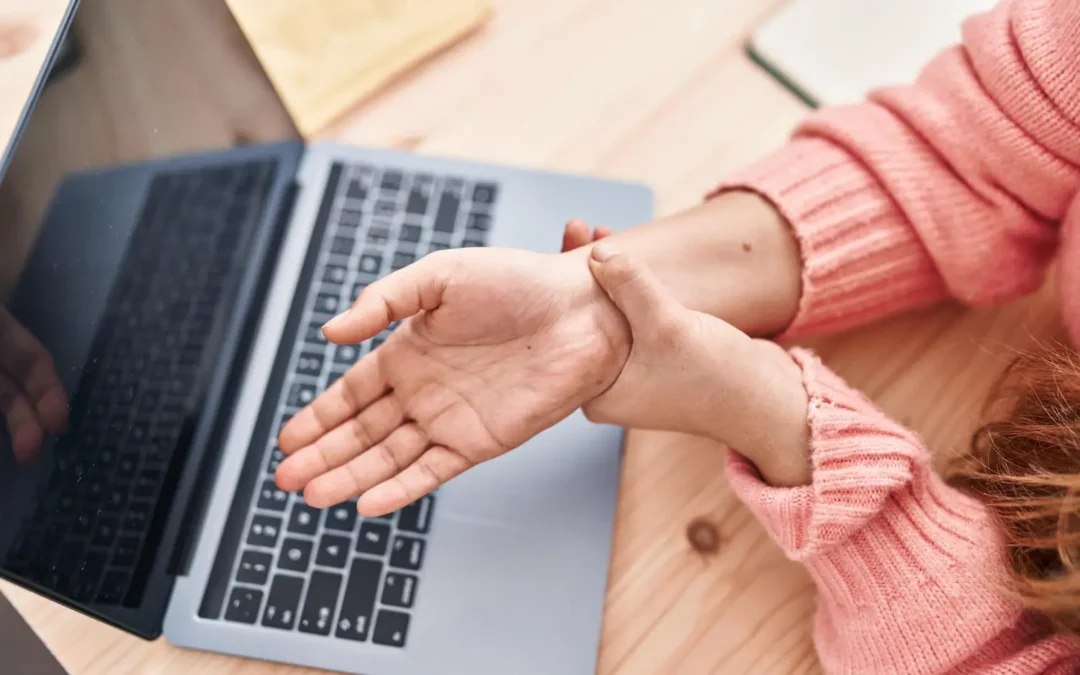
How Manual Osteopathy Can Help Carpal Tunnel Syndrome in Calgary
If your hand goes numb halfway through a workday, if you wake up at 3 AM shaking pins-and-needles out of your fingers, or if you’ve already been told to brace for carpal tunnel surgery — there’s a conversation worth having before the scalpel comes out. Manual osteopathy, paired with Cyriax friction therapy, has a track record of relieving carpal tunnel symptoms in Calgary patients who never end up needing surgery at all.
This post explains what carpal tunnel actually is, why so many Calgary office workers and trades people develop it, why hands-on therapy works, what a session at Orthosports looks like, and how Alberta insurance treats manual osteopathy.
What carpal tunnel syndrome actually is
The carpal tunnel is a narrow passage on the palm side of your wrist, bordered by wrist bones below and a tough ligament above. Nine tendons and one major nerve — the median nerve — squeeze through it. When the tissues around that nerve get inflamed, swollen, or adhered, the nerve gets compressed. That’s when your thumb, index, middle, and half of your ring finger start going numb, tingling, or burning.
Common symptoms:
- Numbness, tingling, or “falling asleep” sensations in the thumb, index, and middle fingers
- Night-time symptoms that wake you up
- Weakness in grip — dropping your phone, your keys, your coffee cup
- Pain that radiates up the forearm
- A dull ache that never fully goes away
Surgery cuts the ligament to decompress the nerve. It works, but it’s irreversible, has a recovery window of weeks to months, and doesn’t address why the nerve got compressed in the first place.

Why Calgarians get carpal tunnel more than you’d think
Office work is the obvious culprit. Eight hours of keyboarding with the wrists slightly extended, plus phone-scrolling during breaks, plus driving on Deerfoot with the wrists locked at 10-and-2, adds up fast.
But we also see carpal tunnel regularly in:
- Tradespeople and construction workers — repetitive tool use, vibration exposure
- New parents — hours of carrying, holding, and feeding with the wrists bent
- Cyclists and CrossFit athletes — loaded wrist flexion and repeated grip work
- Massage therapists and physiotherapists (irony noted)
- Pregnant women — fluid retention adds pressure in the tunnel
Calgary’s long winters don’t help either — cold hands lose circulation quickly, and people spend more time hunched in sedentary postures.
Why manual osteopathy works without surgery
Surgery addresses the symptom: nerve compression. Manual osteopathy addresses the cause: the soft tissue dysfunction that built up the compression in the first place.
At Orthosports, carpal tunnel treatment is built around three tools:
- Joint mobilization of the carpal bones — restoring normal motion in the wrist joint itself, so tissues aren’t jammed under abnormal load
- Cyriax transverse friction — a specific technique that breaks up adhesions around the flexor tendons and the median nerve, restoring glide
- Myofascial release up the kinetic chain — the median nerve runs from the neck through the shoulder, down the arm, into the wrist. If the neck or shoulder is locked up, the wrist pays the price. We treat the whole chain.
Most patients feel meaningful improvement within 2–4 sessions. Long-standing cases may take 6–8 sessions plus a home routine.
What a session at Orthosports looks like
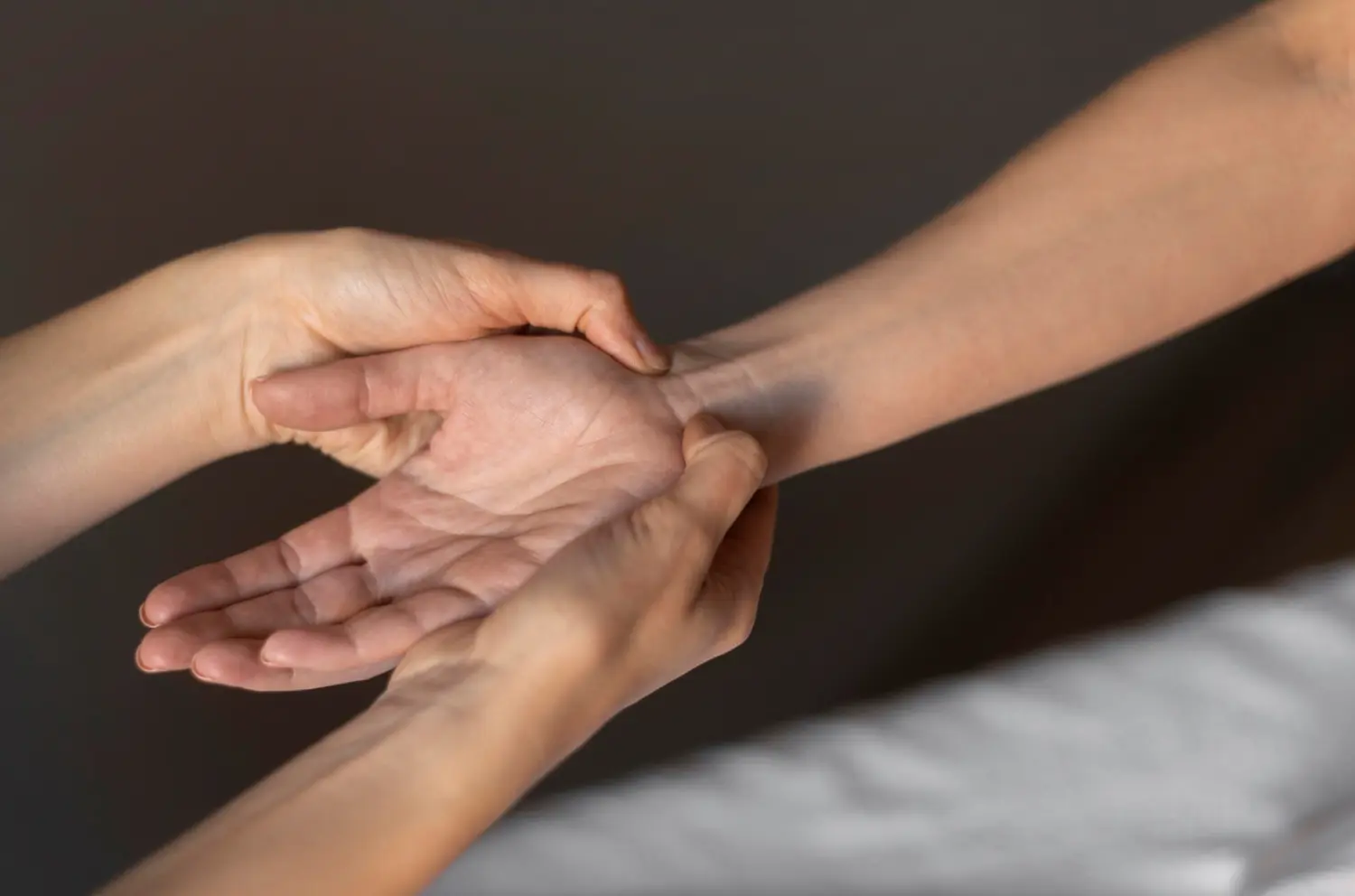
Your first visit is an assessment session. We start with questions — what you do for work, how long you’ve had symptoms, what makes them worse, what you’ve already tried. Then a movement and range-of-motion exam of the neck, shoulder, elbow, and wrist. We use nerve-tension tests to confirm whether the median nerve is genuinely the issue, or whether a cervical-nerve root problem is mimicking carpal tunnel.
From there we move into hands-on treatment. A typical session is 45–60 minutes. You stay fully clothed. You’ll do a short, simple home-care routine between visits — usually two stretches and one nerve-glide drill, no more than three minutes a day.
Insurance coverage in Alberta
Manual osteopathy is not covered by Alberta Health Care. It is, however, covered by most private extended health benefit plans in Alberta — Blue Cross, Sun Life, Manulife, Canada Life, Pacific Blue Cross, and most employer-sponsored plans. Your plan may list it as “manual osteopathy” or “osteopathic services,” and it’s often grouped with massage therapy coverage.
Two things to check with your provider before booking:
- Whether your plan covers manual osteopathy specifically (some cover only osteopathic physicians — different credential)
- Your per-visit maximum and annual cap
We provide receipts after every session that you can submit directly.
When to see a therapist versus your doctor
If you’re experiencing any of the following, book with your family doctor first — manual therapy is not the right starting point:
- Sudden, severe hand weakness (not gradual)
- Muscle wasting at the base of the thumb
- Symptoms after a major wrist trauma (fracture, deep laceration)
- Known cervical disc herniation causing nerve symptoms
For everyone else — the typical “my hand goes numb at night and grips weakly during the day” pattern — manual osteopathy is a reasonable, low-risk first step.
Book your assessment
You don’t need a referral. Book a manual osteopathy assessment online or call (403) 984-9962. The first session includes the full assessment before any hands-on treatment — so you’ll know whether we can help you before you commit to a plan.
FAQ
Is manual osteopathy for carpal tunnel covered by Alberta insurance?
Manual osteopathy is not covered by Alberta Health Care, but most private extended health benefit plans in Alberta — including Blue Cross, Sun Life, Manulife, and Canada Life — do cover it. We recommend calling your benefits provider before booking to confirm your specific plan includes manual osteopathic services and to check your per-visit maximum.