
NeuroKinetic Therapy (NKT) in Calgary – Fix the Root Cause of Your Pain
Do you suffer from chronic pain? Do you find yourself feeling weak, or getting injured over and over again? Does it seem like nothing ever works for long?
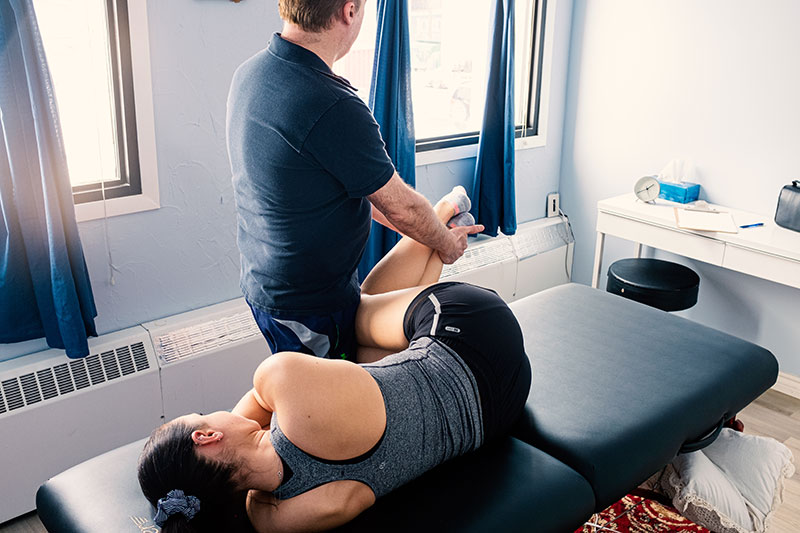
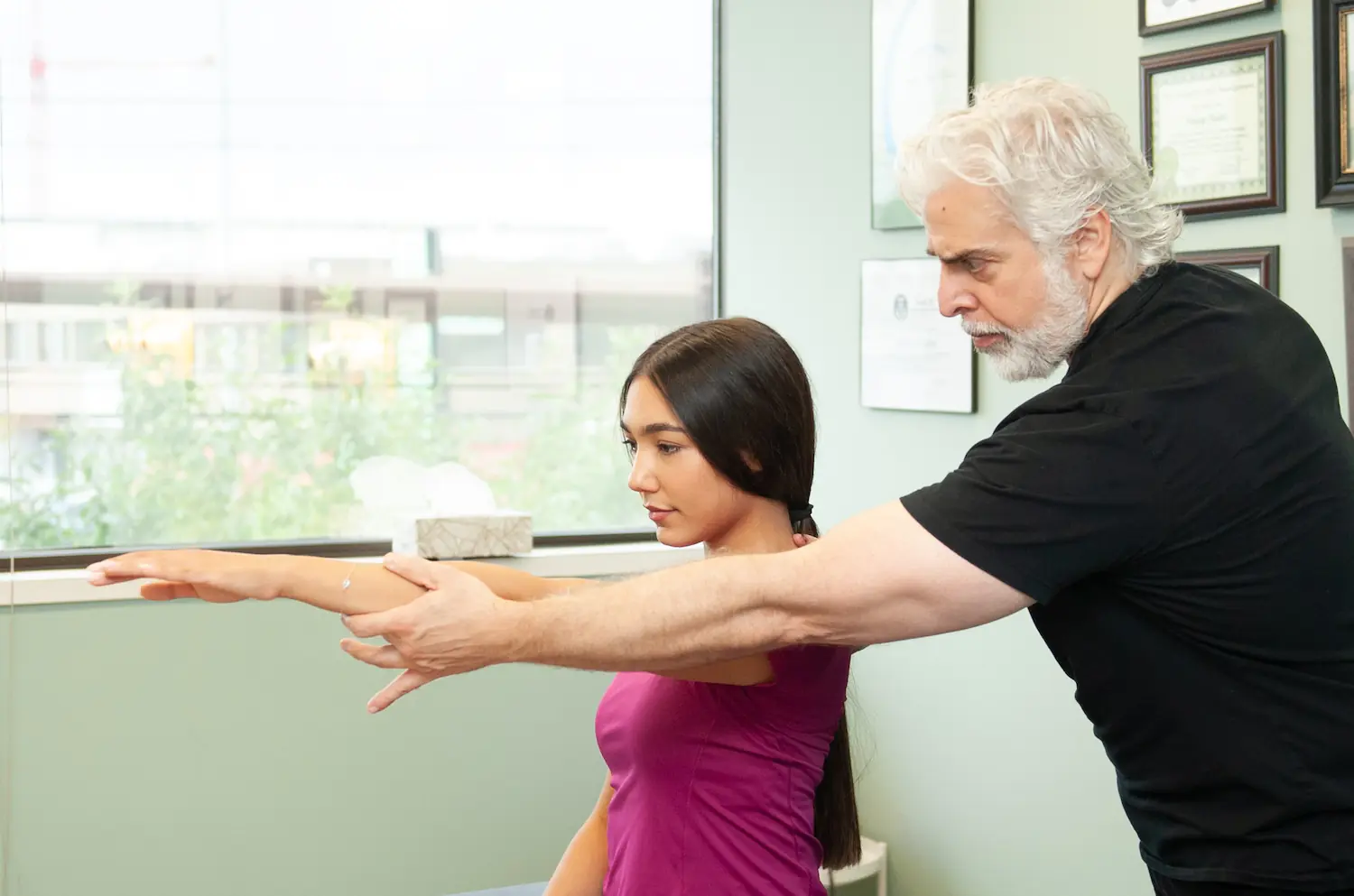
NeuroKinetic Therapy (NKT) is built to address exactly that. It combines motor control theory and manual muscle testing to detect and treat the dysfunctional neurological patterns that cause your body to compensate, over-recruit certain muscles, and keep producing pain in the same places.
Every time we use NKT at Orthosports Calgary, we see improved athletic performance and lasting pain reduction. Often after just one session.
Why Your Pain Keeps Coming Back
Here is the clearest way to understand how compensation patterns work.
Imagine a factory with 10 employees. One of them is performing at 120%, while the other nine are doing just 10% each. That overloaded worker is heading for burnout. When we add load (a long training run, a heavy lift, or even a slip and fall), that 120% employee hits 140% and eventually quits. That is a sports injury.
With NKT, we address the pattern, not just the injury. We help the overloaded muscle relax, then activate the underperforming ones. When each muscle is operating at around 90%, the whole system works together instead of one muscle holding everything up.
The goal of NKT is to find the cause and then treat it. Stop chasing your own tail.
What Is NKT and How Does a Session Work?
When a muscle is injured, overloaded or chronically underused, the brain compensates by recruiting other muscles to pick up the slack. Over time that pattern becomes locked in at the motor control centre in the brain: the compensating muscles become overworked and painful, the inhibited ones stay weak. Most manual therapies treat the painful muscle directly, which is why the relief does not last. NKT treats the pattern. Here is what a session looks like:
❶
Step 1: Muscle testing
Your therapist applies light resistance to specific muscles to test whether they are firing correctly. Muscles that test weak are being inhibited by the nervous system.
❷
Step 2: Release the compensating muscle
Using light manual pressure or soft tissue techniques, the overworking muscle is released. This signals that the compensation pattern is no longer needed.
❸
Step 3: Activate the inhibited muscle
Immediately after the release, the inhibited muscle is retested and cued to activate, while the nervous system is ready to accept the new pattern.
❹
Step 4: Home exercises
Your therapist assigns targeted exercises to reinforce the new motor pattern between sessions. Without this step the old compensation can re-establish itself.
Real Results from Our Patients
One of our patients was training for a 50K marathon. He was frustrated, struggling with chronic pain, and considering giving up. After a single NKT appointment, he completed a 37-kilometre training run without difficulty. He finished the 50K and received outstanding results.
Another patient came in after a slip and fall. She was certain she had fractured a rib. Her rib was intact, but the fall had strained a muscle in that area, and the resulting compensation pattern was making her shoulder feel weak and unstable. We released the strained muscle and activated the inhibited shoulder muscles. She returned to work and went back to babysitting her grandchildren without any trouble.
These are not unusual outcomes. When you find and fix the neurological pattern, the body responds quickly.

Who Benefits from NeuroKinetic Therapy?
NKT is effective for a wide range of patients at our SW Calgary clinic, including:
✶
Chronic Neck and Shoulder Pain
Recurring pain that returns after massage or physiotherapy often has a motor control component. NKT identifies the neurological pattern driving it.
✶
Sports Injuries
Recurring hamstring, shoulder or knee injuries often come from compensation patterns left over from earlier injuries that were never resolved neurologically.
✶
Post-Surgical Rehabilitation
After surgery the body builds new compensation patterns around the surgical site. NKT finds and resolves them as part of recovery.
✶
TMJ Dysfunction
Jaw pain often involves a chain of compensation between the jaw, neck and upper back muscles. NKT can address the full chain.
✶
Posture and Movement Efficiency
Forward head posture, rounded shoulders and pelvic imbalances often reflect motor control deficits rather than purely structural problems.
✶
Athletes Optimizing Performance
Serious athletes use NKT to find and fix inhibited muscles that limit speed, power and movement efficiency, even when there is no pain.
NKT + RAPID NFR + Massage
At Orthosports we often combine NKT with other treatment modalities for faster, more lasting results.
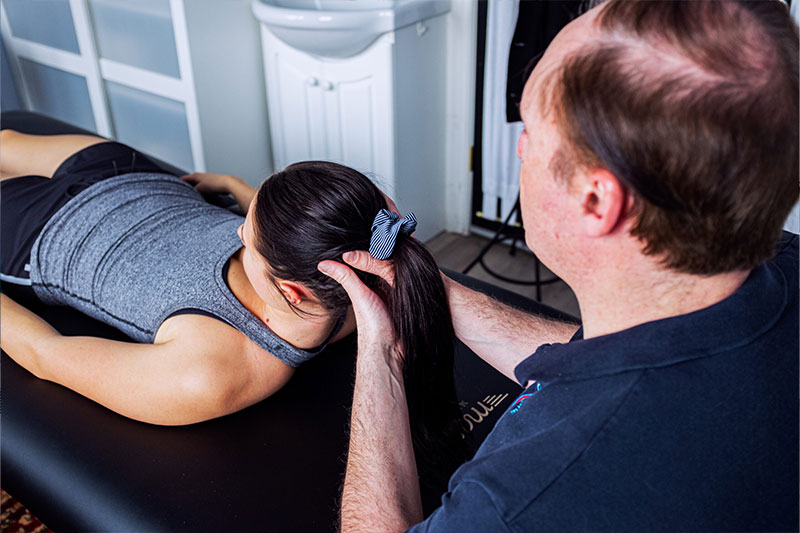
NKT resets the motor compensation pattern. RAPID NeuroFascial Reset releases the fascial restrictions that lock those patterns in place. Deep tissue massage addresses the residual soft tissue tension in the overworked muscles. Where inflammation is limiting progress, we may also add laser therapy as a separate session, and NKT is frequently combined with our broader sports therapy massage work.
These approaches work on different layers of the same problem: the motor control system, the fascial system and the soft tissue. Together they address the full picture in a way no single therapy can.
Our Location: Serving Manchester Industrial and SW Calgary
Located at 205-222 58 Ave SW in Manchester Industrial, just off Macleod Trail and across from Chinook Mall, we’re easy to reach from Windsor Park, Fairview, Haysboro, and Kingsland. Many of our clients come from nearby gyms, clinics, and workplaces for convenient same-day treatment.
📍 Address: 205-222 58 AVE SW, Calgary, AB, T2H 2S3
📞 Call: (403) 984-9962
Frequently Asked Questions About NeuroKinetic Therapy in Calgary
What is NeuroKinetic Therapy used for?
NKT is used to identify and correct muscle imbalances and compensation patterns that cause chronic pain, recurring injuries and poor movement. It is particularly effective for shoulder, neck, back and sports injuries where the root cause is neurological rather than purely structural.
How is NKT different from massage?
Massage works on soft tissue tension and circulation. NKT works at the neurological level: testing which muscles are inhibited and which are compensating, then correcting the motor control pattern driving the problem. It addresses the root cause, not just the symptoms.
How many NKT sessions are needed?
Most compensation patterns respond within 3 to 6 sessions. Complex or long-standing patterns may take longer. Because NKT includes home exercises that reinforce the motor reset, patients often keep improving between sessions.
Is NKT painful?
No. Muscle testing uses very light resistance and the release techniques are gentle. Most patients notice an immediate change in range of motion or pain level after their first session.
We help you manage chronic pain. Faster!
Orthosports can help get you fixed up.
Orthosports Calgary
205-222 58 Ave SW, Calgary, AB T2H 2S3, Canada
Manchester Industrial area, near Chinook Mall
Business Hours:
Mon - Fri: 10:00 AM – 9:00 PM
Sat: Closed
Sun: 10:00 AM – 9:00 PM
Follow Us: