Reviewed by Sergey Raiter, DOMP, RMT, Manual Osteopathic Practitioner and certified Level 3 NeuroKinetic Therapy practitioner at Orthosports Calgary.
Quick answer: Some aches are part of growing, but knee and heel pain during growth spurts, and the overuse that comes from busy winter sport schedules, can point to something worth looking at. Orthosports Calgary, an orthopedic massage and osteopathy clinic in SW Calgary, assesses young athletes carefully, treats the cause gently rather than just rubbing the sore spot, and teaches the athlete simple habits to keep them playing.
Key takeaways
- Common complaints in young Calgary athletes include knee pain below the kneecap, heel pain, and general overuse from single sport winter schedules.
- Growing pains are real, but pain that is sharp, one sided, or that limits how a child moves is worth a proper assessment.
- Orthosports Calgary assesses young athletes, treats the cause gently, and gives the athlete simple home maintenance.
- This builds informed families who understand their child’s body, rather than a quick rub that wears off.
Worried about your young athlete’s pain? Book an assessment at Orthosports Calgary or call (403) 984-9962.
What is the difference between growing pains and an injury?
Growing pains are typically dull, come and go, often show up in the evening or at night, and affect both legs. They are not usually tied to one specific movement, and the child moves normally the next day. They are uncomfortable, but they are not a sign that something is wrong.
An injury is more likely when the pain is sharp, stays in one spot, is on one side only, gets worse with a specific activity, or makes the child limp or avoid a movement. Pain that lasts more than a week or two, or keeps returning every time they play, is worth having looked at rather than waiting out. As a simple rule, pain that changes how your child moves deserves a closer look.
What injuries are common in young athletes?
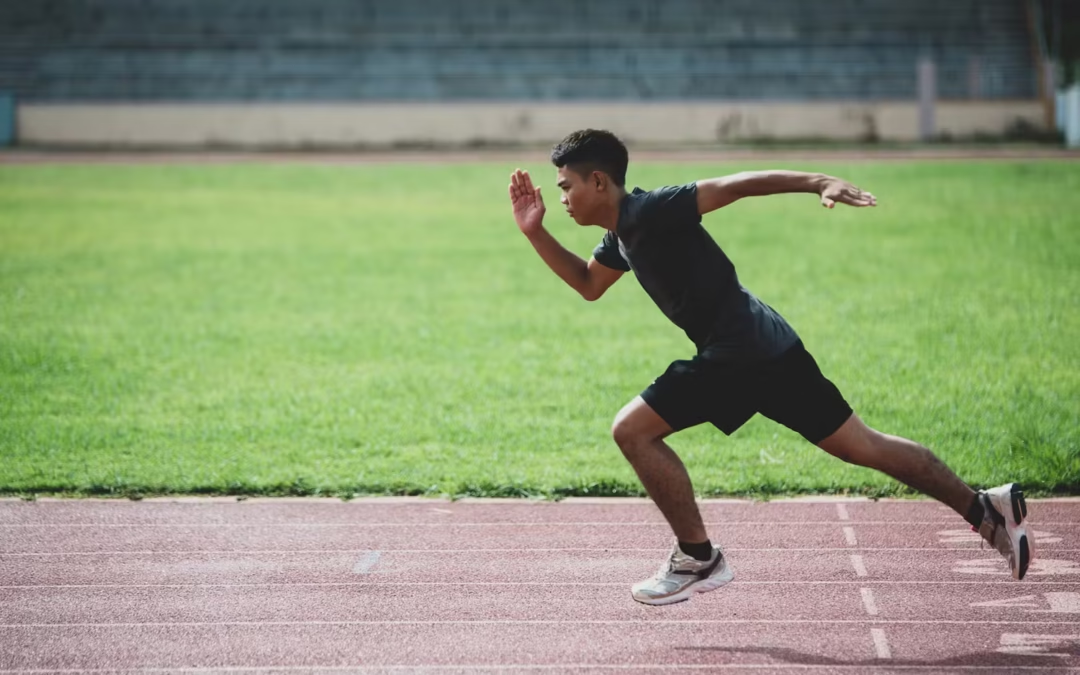
Two patterns show up often during growth spurts. Pain just below the kneecap, which tends to flare with running and jumping, is a well known overuse pattern in growing athletes and is common in hockey, basketball and volleyball players. Heel pain, especially in kids who are active on hard surfaces, is another. Both are linked to the way bones and muscles grow at slightly different rates, which leaves certain areas sensitive to load for a while. For plain language background on these conditions, AAOS OrthoInfo is a reliable source.
The other big factor is overuse. Many kids in Calgary now play one sport almost year round, with hockey, basketball, volleyball or ski training stacking practices and games close together through the winter. Without enough recovery, small strains do not get a chance to settle, and a minor niggle becomes a season long problem.
Why does the sore spot often trace back somewhere else?
In a growing athlete, the place that hurts is frequently not the place that started the problem. A sore knee can trace back to how the hip or the foot and ankle are working, because the knee sits between them and absorbs whatever they do not control. Treat only the knee and the relief is short lived, because the thing loading it is still loading it. This is exactly why we assess the whole chain rather than just the painful joint, and it is the difference between a quick rub and a lasting fix.
What are Osgood-Schlatter and Sever’s disease?
Two of the most common growth related complaints have names worth knowing. Osgood-Schlatter is pain, and sometimes a tender bump, just below the kneecap, where the tendon pulls on a growth area of the shin bone. It is common in active kids during a growth spurt and tends to flare with running and jumping. Sever’s disease is the same idea at the heel, where the Achilles tendon pulls on the growing heel bone, and it is common in kids who are active on hard surfaces.
Both are linked to a simple fact: during a growth spurt, bones can lengthen faster than the muscles and tendons attached to them keep up with, which leaves those attachment points sensitive to load for a while. The good news is that they usually settle with the right management. In the meantime we can reduce the load on the painful area, keep the surrounding muscles working well, and help your child stay active rather than sitting the season out. For plain language background, AAOS OrthoInfo covers both.
Should a young athlete rest or keep playing?
Parents often ask whether to pull a child from sport or let them play through it. The honest answer is that it depends on the pain. Mild discomfort that settles quickly and does not change how they move is usually fine to work around with some load management. Pain that is sharp, one sided, makes them limp, or gets worse week after week is a sign to ease off and get it assessed.
Completely stopping all activity is rarely the answer either, because fitness and confidence matter too. More often it is about adjusting the load, swapping some high impact sessions for lower impact ones, building in recovery days, and treating the cause so the painful area can settle while your child keeps moving. We help you find that balance rather than defaulting to total rest or to pushing through.
What does a first visit look like for a young athlete?
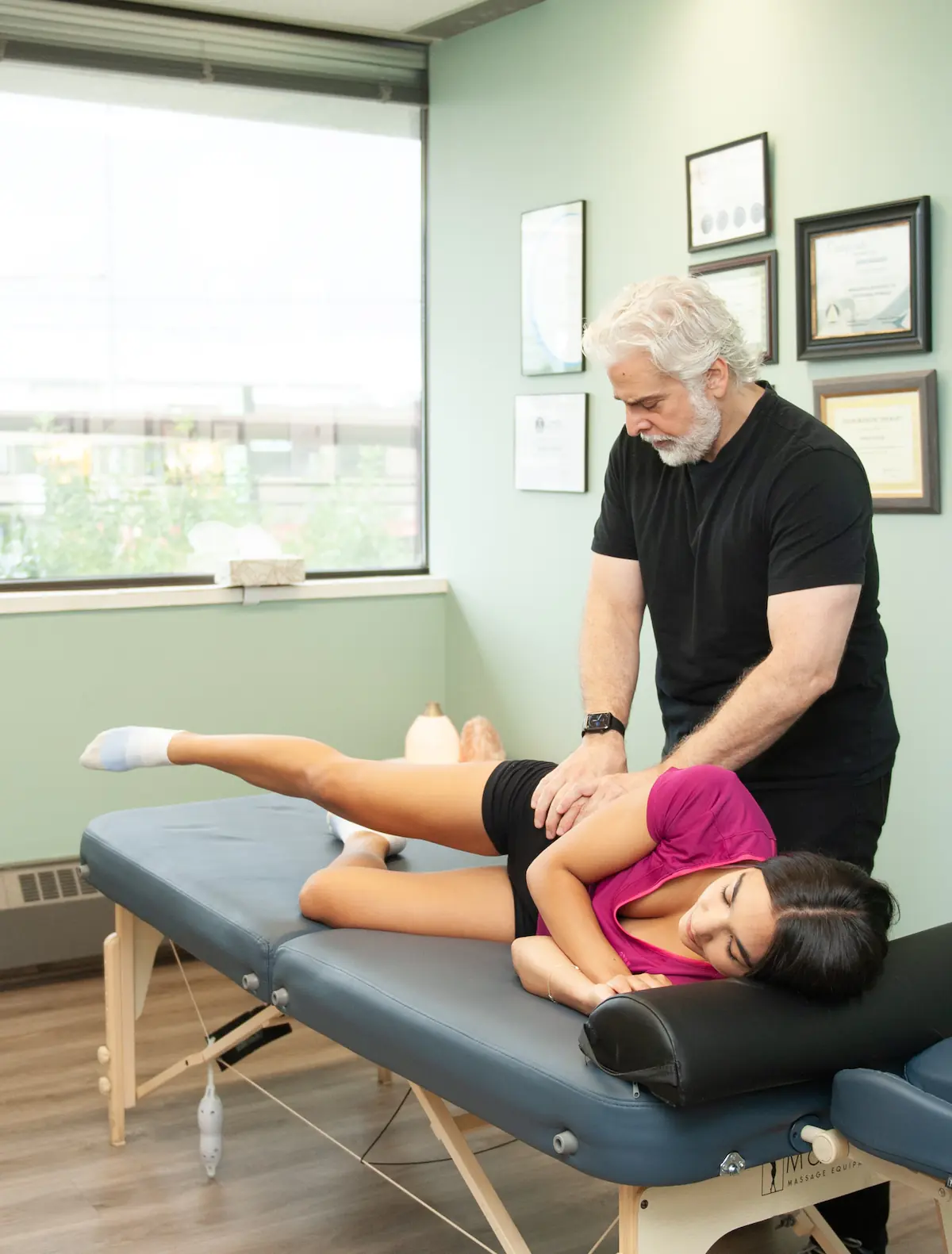
A first visit is relaxed and unhurried. We talk with your child, and with you, about the sport, the schedule, when the pain shows up and what makes it better or worse. Then we watch how your child moves through a few simple patterns, so we can see where the strain is really coming from rather than guessing from the sore spot alone.
Treatment is gentle and age appropriate, and we explain what we are doing as we go, because a young athlete who understands their own body takes better care of it. Your child leaves with two or three simple things to do at home, and you leave with a clear picture of what is going on and what to watch for. There is no pressure to book a long course of visits, and many young athletes need only a few.
How does Orthosports help young athletes?
We start with an assessment that is appropriate for a younger body, looking at how the athlete moves and where the strain is really coming from. Treatment is gentle and specific. We use NeuroKinetic Therapy and targeted orthopedic techniques for the area involved, and we keep everything comfortable and age appropriate.
Just as important, we teach the athlete simple movements and habits they can do themselves, so they understand their own body and can stay ahead of the problem. A young athlete who learns early how to warm up, recover and listen to a niggle before it becomes an injury carries that for the rest of their playing life. A parent is always welcome to stay for the visit.
Not sure if it is worth a visit? Book a 30 minute assessment and we will tell you honestly what we find. Book online.
How can I help my child avoid injuries next season?
The best protection against overuse is variety and recovery. A young body that plays one sport year round, with practices and games stacked close together, has fewer chances to recover than one that mixes activities and takes real rest days. Encouraging a second sport, or an off season with lighter, different movement, spreads the load across the body instead of hammering the same joints every week.
Beyond that, a quick assessment before a busy season can catch a developing pattern early, while it is easy to correct. Teaching your child to warm up, to recover, and to speak up when something hurts rather than hide it also pays off for years. If your child has already had one bout of knee or heel pain, that is an extra reason to book an early season check, since these patterns can return during the next growth spurt.
What can parents do at home?
- Watch for pain that is one sided, sharp, or that changes how your child walks or plays. Those are the signs to get it checked.
- Build in rest. A day off between hard sessions lets growing bodies recover, and recovery is when they actually get stronger.
- Encourage variety. Mixing activities spreads the load instead of stressing the same joints over and over, which is one of the best protections against overuse.
- Keep an eye on growth spurts. Kids are often more prone to knee and heel pain during a fast growth phase.
- Check their footwear. Worn out shoes on hard gym floors, courts or arenas add load to young knees and heels.
- Do not push a child to play through real pain. Pain is information, not weakness.
These habits reduce overuse, and an assessment adds a clear picture of what is actually going on so you are not guessing.
Is treatment for young athletes covered by insurance?
Treatment is provided by registered massage therapists and receipted as massage therapy. We direct bill Sun Life, Canada Life, Alberta Blue Cross, Medavie Blue Cross and Green Shield, often under a parent’s family plan, with coverage depending on the plan. See our direct billing and insurance guide for details.
Where can I get help for a young athlete in Calgary?
Orthosports Calgary is at 205-222 58 Ave SW in Manchester Industrial, across from CF Chinook Centre, with free parking and evening hours that work around school and practice. We are open Monday to Friday and Sunday from 10 AM to 9 PM, and families reach us easily from Windsor Park, Haysboro, Kingsland, Fairview and across central and south Calgary.
Give your young athlete the right start. Book an assessment or call (403) 984-9962.
Frequently asked questions
Is massage safe for children and teens?
Our approach for young athletes is gentle and assessment led, focused on how they move and the specific area involved. A parent is welcome to stay for the visit.
Will my child need many appointments?
Often not. Once we find and treat the cause and teach a few home habits, many young athletes manage well with occasional visits. We give a clear plan after the assessment.
What should we book first?
A 30 minute assessment is the best first step. We check how your child moves, explain what we find, and recommend only what is needed.
My child only has pain during sport. Is that still worth checking?
Yes, especially if it is one sided or keeps returning. Catching an overuse pattern early is much easier than treating it after months of load.
How young is too young to come in?
There is no strict cutoff. If your child is active and has pain that is changing how they move, an assessment is appropriate. We keep everything gentle and age appropriate.
About the author
Sergey Raiter, DOMP, RMT, is a Manual Osteopathic Practitioner and a certified Level 3 NeuroKinetic Therapy practitioner at Orthosports Calgary. He helps active people of all ages, including young athletes, find and treat the cause of pain so they can keep playing.