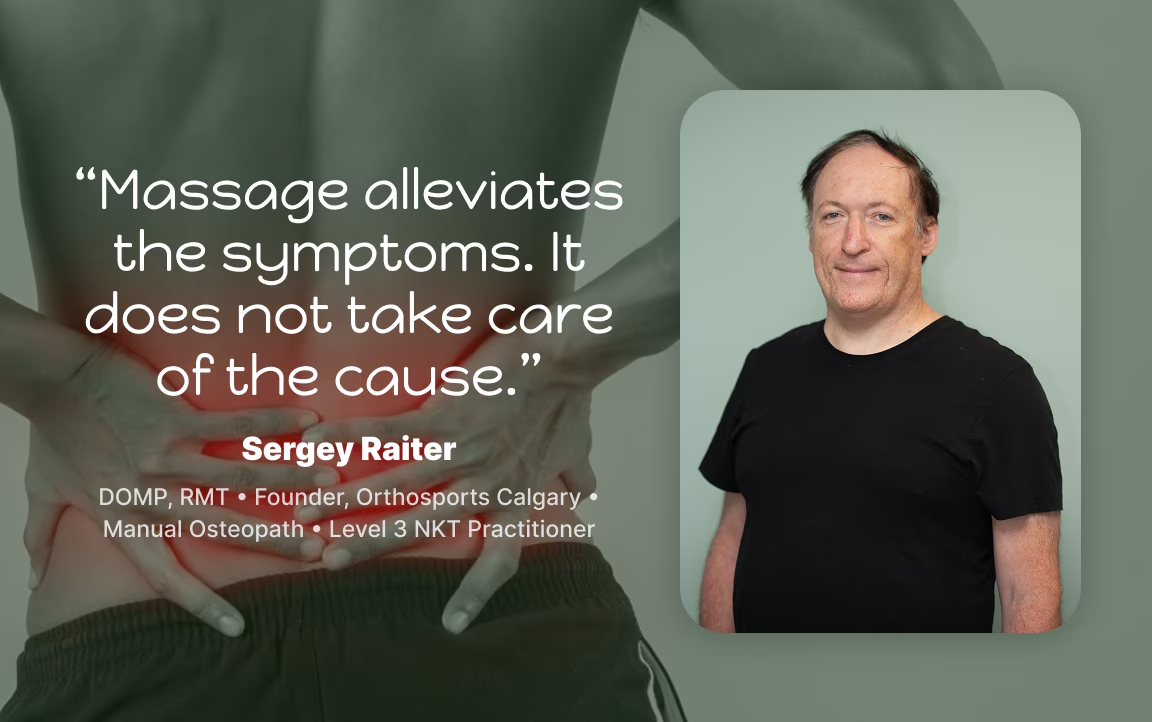

Reviewed by Sergey Raiter, DOMP, RMT, Manual Osteopathic Practitioner and certified Level 3 NeuroKinetic Therapy practitioner at Orthosports Calgary.
Quick answer: Curling loads your lower back, knees and shoulders more than it looks, and the strain builds over a season of deliveries, lunges and sweeping. Orthosports Calgary, a sports and orthopedic massage clinic in SW Calgary, assesses how you move, treats the real source of the strain with NeuroKinetic Therapy and deep tissue work, and gives you a plan to keep playing through league nights and bonspiels.
Key takeaways
- The most common curling complaints we see in Calgary are lower back and hip strain, sliding knee pain, and shoulder and neck tension.
- These injuries usually build from repeated load rather than a single accident, which is exactly the kind of problem that responds well to treating the cause.
- Orthosports Calgary assesses how you move, treats the real source of the strain, and gives you a plan to keep playing all season.
- Sergey Raiter is a Manual Osteopathic Practitioner and Level 3 NeuroKinetic Therapy practitioner, and the clinic is open evenings, close to central Calgary, with free parking.
Playing through an ache this season? Book an assessment at Orthosports Calgary or call (403) 984-9962.
What are the most common curling injuries?
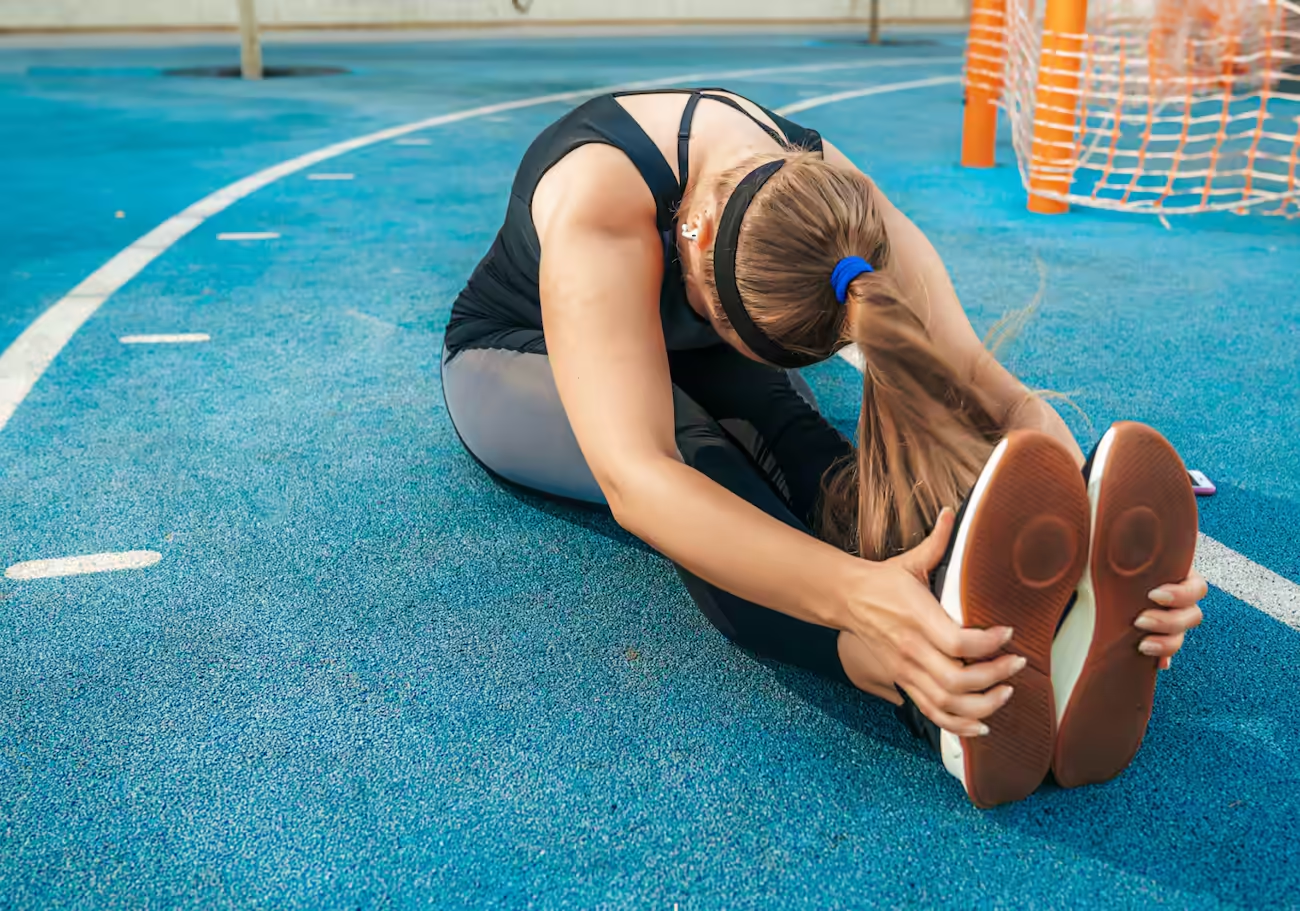
Most curling strain falls into three areas. The lower back and hips take the load of the delivery and the deep lunge out of the hack, and that is where many curlers feel it first. The sliding knee absorbs force and rotation every time you push out, which can irritate the joint and the tissue around the kneecap. And the shoulders, upper back and neck tighten from the repetitive motion of sweeping and from holding a braced position through long ends.
None of these usually arrive as a dramatic injury. They build quietly over practices and games until one morning you notice you cannot bend, turn or get out of the hack the way you used to. Because the strain is cumulative, the fix is not just to rest the sore spot, it is to find what is overloading and correct it.
Why does curling bother my lower back and hips?
The delivery asks a lot of your hips and lower back at once. You drop into a lunge, stabilize, rotate slightly and control the rock, all while balancing on a slick sheet of ice. If the muscles that should stabilize your hips and pelvis are not doing their share, your lower back ends up doing the work, and it protests.
This is the same compensation pattern we treat in many Calgary clients, and it is why simply stretching the sore spot often does not hold. At Orthosports we use NeuroKinetic Therapy to find which muscles have gone quiet, then retrain them and release the overworked ones, with orthopedic work focused on your lower back and hips. The aim is a back that can handle the delivery again, not just one that feels looser for an afternoon.
What about sliding knee and shoulder pain?
Knee pain in curlers often comes from the load and rotation through the sliding leg. The kneecap and the tissue around it take repeated stress, especially if the hip above is stiff or the foot below is not stable. We assess the whole leg, then treat the cause rather than just the sore point. You can read more about how we approach knee pain.
Sweeping is a repetitive, full body push, and it tends to tighten the shoulders, upper back and neck. If you finish a game with a stiff neck or a sore shoulder, that is the pattern. We work on the shoulder and neck, along with the muscles further down the chain that may be forcing them to overwork. Treating the shoulder in isolation often misses why it tightened in the first place.
What actually happens to your body in a curling delivery?
A curling delivery is a controlled, one sided movement that your body does not do anywhere else. You push out of the hack on one leg, slide low with your weight forward, hold a stable trunk over a gliding slider, and release the rock with a small rotation, then do it again, end after end. That mix of a deep lunge, a long hold and a slight twist is unusual, and the parts that control it, the hips, the deep core and the sliding knee, are exactly the ones curlers strain most.
Sweeping piles a fast, repetitive upper body push on top of all that. Over a two hour game, and two or three games a week across a winter season, the volume adds up. None of it is dangerous on its own. The problem is the repetition, and the fact that any weak link in the chain gets loaded every single end until it complains.
Does age or fitness level change how we treat it?
Curling is a sport people play for decades, from juniors to curlers well into their seventies and eighties, and the body you bring to the ice varies a lot across that range. Older curlers often feel the delivery and the lunge in the hips and knees, where years of load have trimmed some mobility. Younger, more competitive curlers tend to feel the sheer volume of long practices and back to back bonspiel games.
In both cases the answer is the same. We find what is overloading for your body and your level, treat the cause, and build a short maintenance routine around it. Because we assess and tailor everything rather than running a set routine, the same clinic can help a competitive skip and a Tuesday night social curler both get comfortably through the season.
How does Orthosports keep curlers playing?
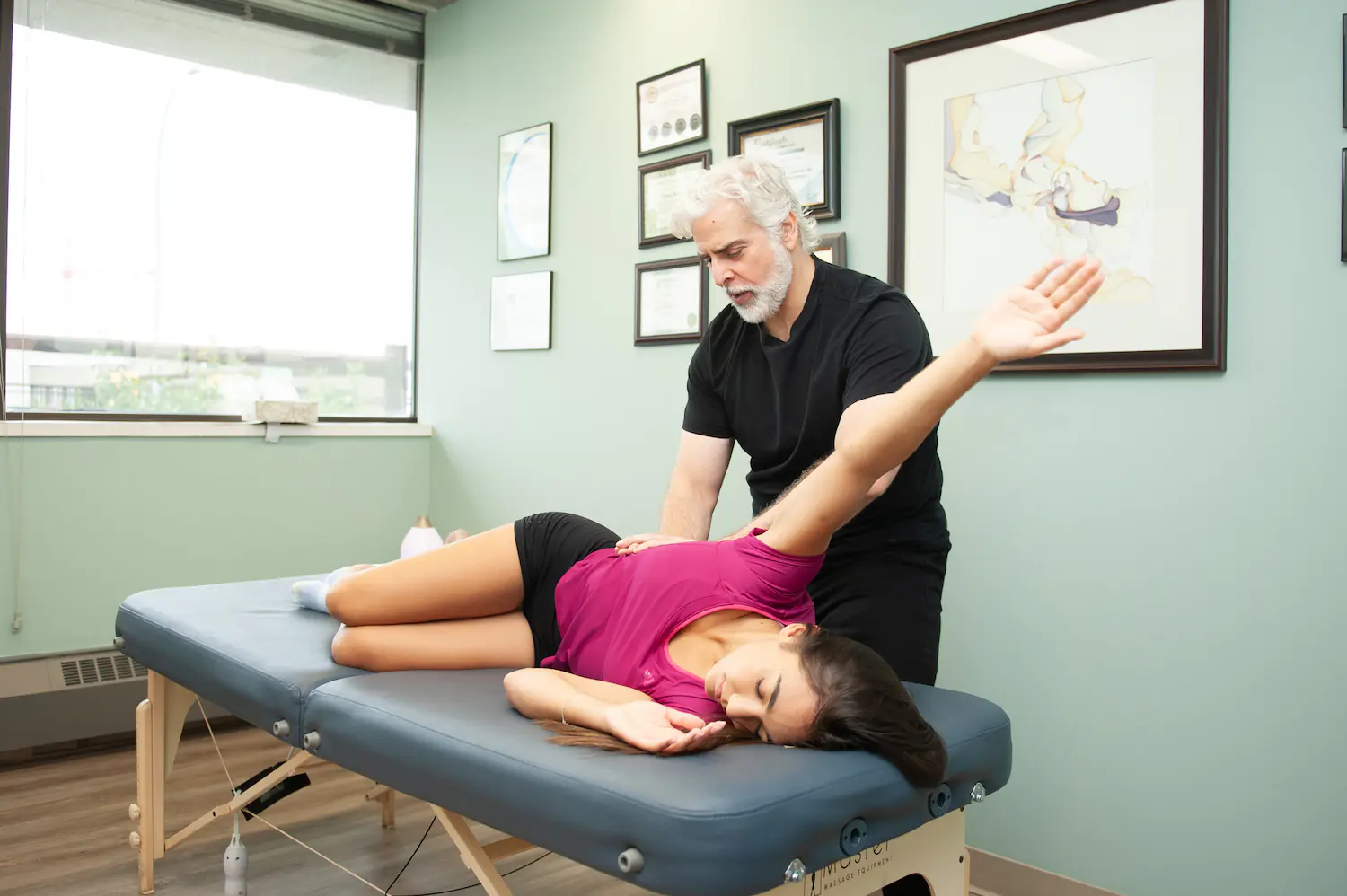
Every visit starts with an assessment. We look at how you move through the positions curling demands, from the lunge to the sweep, find where the real strain is coming from, and treat it with a mix of NeuroKinetic Therapy, deep tissue and orthopedic techniques. You leave with simple movements to keep the result between games.
The goal is not a relaxing hour that wears off by your next draw. It is to fix what is overloading, so you can keep curling through the season. If you want a faster recovery after a heavy weekend of games, laser therapy can help settle an irritated area, and our guide on how to recover faster after a sports injury covers what to do between sessions.
Not sure where to start? Book a 30 minute assessment and we will pinpoint the problem. Reserve a time online.
Can you help me prevent injuries, not just treat them?
Yes, and for curlers it is one of the most useful things we do. Once we have found which muscles are underworking and which are overloaded, part of every visit is a short maintenance plan to keep the result and reduce the chance the strain returns. For a sport played two or three times a week across a long winter season, staying ahead of the strain is far easier than chasing it after it flares. Many curlers come in early in the season, get the pattern sorted, and then only need the occasional tune up to get through to the bonspiels in spring.
Can I keep curling while you treat me?
For most curlers, yes. A big part of our work is keeping active people competing rather than telling them to stop. Depending on what we find, we might adjust how hard you push in practice for a short stretch, or simply treat the cause while you keep playing and watch how it responds. Because curling runs across a long winter season, the realistic goal is to manage the load and keep you on the ice, not to pull you off it.
The exception is a sharper injury, a joint that locks or gives way, or pain that is clearly getting worse game after game. In those cases we will say so plainly and adjust the plan. It also helps to come in earlier rather than later. Curlers who get the pattern assessed near the start of the season, before a niggle has had months to dig in, tend to need fewer visits and spend less of the winter working around pain.
When should I see someone rather than wait it out?
A little stiffness after a hard game is normal. See someone if an ache lasts more than a week or two, keeps coming back every time you play, limits how you move at home or work, or includes sharp pain, locking or giving way in a joint. Catching a repetitive strain early is much easier than letting it settle into a long term pattern. For general guidance on sports strains, the Canadian source HealthLink BC is a reliable place to start.
Is treatment covered by insurance?
Treatment at Orthosports is provided by registered massage therapists and receipted as massage therapy. We direct bill Sun Life, Canada Life, Alberta Blue Cross, Medavie Blue Cross and Green Shield, with coverage depending on your plan. Details are in our direct billing and insurance guide.
Where can I get treatment for curling injuries in Calgary?
Orthosports Calgary is at 205-222 58 Ave SW in Manchester Industrial, across from CF Chinook Centre, with free parking. We are open Monday to Friday and Sunday from 10 AM to 9 PM, so you can come after a game or practice. We are a short drive from most central Calgary clubs and communities, including Windsor Park, Haysboro, Kingsland and the areas around Chinook and Stampede Park.
Keep your season going. Book your assessment or call (403) 984-9962.
Frequently asked questions
Can you treat an injury in the middle of the season?
Yes. Much of our work is helping active people keep competing. We treat the cause and give you a plan to manage the load between games.
Do I need a referral?
No referral is needed to book. If you are not sure what to book, start with a 30 minute assessment.
How many visits will I need?
It depends on how long the strain has been building. Many curlers notice a clear change within the first few visits, and we give you a realistic plan after your assessment.
Can you help prevent injuries, not just treat them?
Yes. Part of every visit is a short maintenance plan to keep the result and reduce the chance the strain returns.
I am a senior curler. Is this still right for me?
Yes. We tailor the assessment and treatment to you. Treating the cause of a strain and keeping you mobile matters at every age, and we work with many older active Calgarians.
About the author
Sergey Raiter, DOMP, RMT, is a Manual Osteopathic Practitioner and a certified Level 3 NeuroKinetic Therapy practitioner at Orthosports Calgary. He works with active Calgarians to find and treat the cause of pain so they can keep doing what they love.