

What’s causing your shoulder pain
Shoulder pain almost always falls into one of a few patterns: a rotator cuff strain from overuse or a specific movement, a frozen shoulder that’s progressively lost range of motion, or referred tension from the neck and upper back. Telling these apart matters, because the right treatment depends on which one you actually have.
At Orthosports Calgary, shoulder pain is assessed before it’s treated. A range-of-motion check and a review of how and when the pain started tells your therapist whether the issue is muscular, mechanical (a true rotator cuff strain), or part of a wider restriction pattern that a whole-body osteopathic approach handles better than isolated shoulder work.
Rotator cuff strain vs. frozen shoulder: how to tell the difference
More likely a rotator cuff strain if:
- Onset: often tied to a specific activity, lift, or overuse period
- Pain location: front or side of shoulder, worse reaching overhead or behind the back
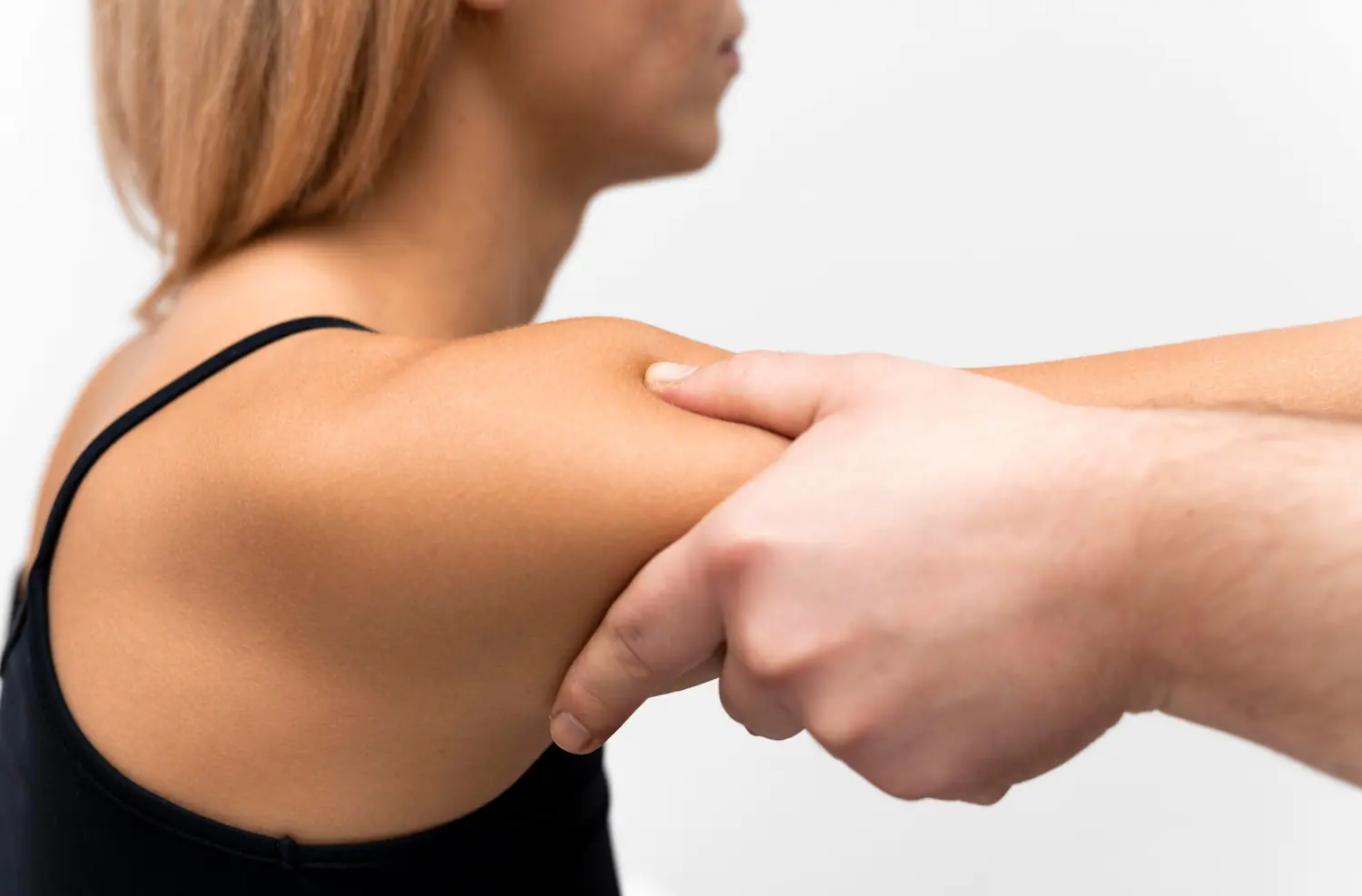
- Range of motion: painful in certain directions, but passive movement (someone else moving your arm) is usually less restricted
- Typical course: improves with targeted soft-tissue work over a number of sessions
More likely a frozen shoulder if:
- Onset: gradual, sometimes with no clear trigger
- Pain location: deep, aching shoulder pain, worse at night
- Range of motion: stiff in almost every direction, including when someone else moves your arm for you
- Typical course: tends to move through stages over months and often needs a longer-term, whole-body approach
This is a general guide, not a diagnosis. If you’re not sure which pattern fits, that’s exactly what the assessment at your first visit is for.
How Orthosports treats shoulder pain and rotator cuff strain
Treatment for a rotator cuff strain typically works from the outside in: releasing tightness in the surrounding muscles (the bicep and chest are common contributors) before addressing the rotator cuff tendons directly. Your therapist locates the specific area of strain using palpation landmarks, then uses cross-fiber friction techniques to help realign the tissue and reduce the buildup that keeps a strain feeling irritated. Range of motion is reassessed through the session so you and your therapist can both see the progress.
For a frozen shoulder or a shoulder problem tied into wider compensation patterns, for example pain that keeps returning no matter how much the shoulder itself is massaged, manual osteopathy is often the better starting point. See our 5 signs you may need to see an osteopath rather than a massage therapist for how to know which applies to you.
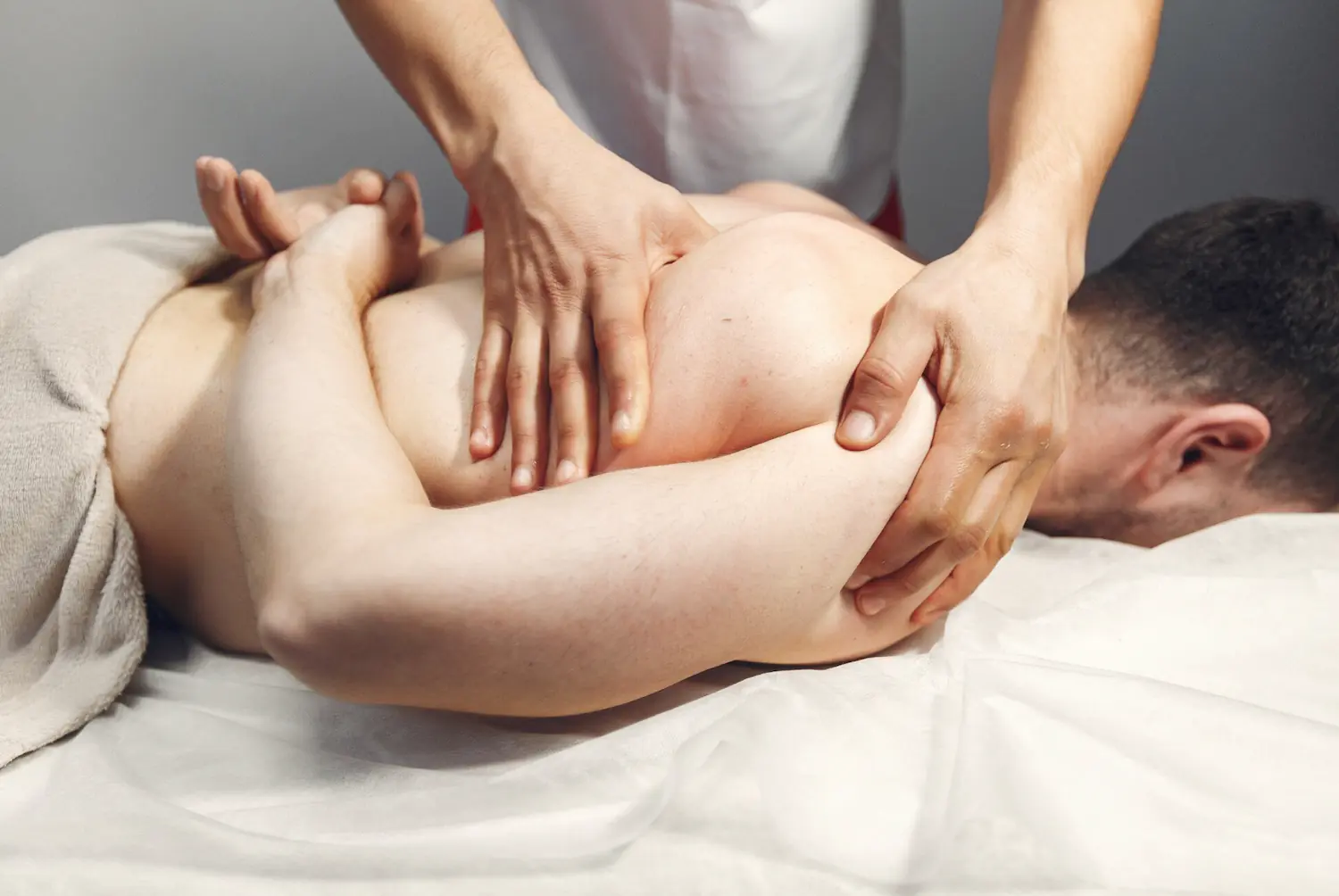
When RAPID NFR is added for shoulder pain
Rotator cuff irritation and frozen shoulder are both listed among the restriction patterns RAPID Neurofascial Reset is designed to address, particularly when standard massage hasn’t resolved a stubborn shoulder issue after a few sessions. RAPID NFR works with the nervous system directly rather than only the muscle, which is often what’s needed when a shoulder has been “guarding” for months. Read our full guide to RAPID NFR to see how sessions work and what to expect.
Common causes of shoulder pain in Calgary clients
- Desk posture: rounded shoulders and a forward head position from long hours at a screen load the front of the shoulder and upper back.
- Gym and CrossFit training: overhead pressing, pull-ups, and high training volume are common contributors to rotator cuff irritation among Calgary’s active population.
- Winter driving and shovelling: repetitive, awkward shoulder loading in cold weather is a seasonal pattern we see every year.
- Racquet and throwing sports: repetitive overhead motion places consistent strain on the rotator cuff tendons.
- An old, unresolved injury: a shoulder that was never fully rehabilitated after a strain or fall often becomes the site of recurring pain years later.
What to expect during shoulder treatment
Expect firm, focused pressure rather than a relaxation-style massage; the goal is to address the specific area of restriction, not general relaxation. Some clients feel mild soreness in the treated area for a day or two afterward, similar to a post-workout feeling; this is a normal response to targeted soft-tissue work and typically settles on its own. Your therapist will walk you through simple movements or stretches to do between visits to reinforce the treatment.
Self-care for shoulder pain between sessions
- Avoid sleeping directly on the painful shoulder where possible; a pillow tucked under the arm can reduce nighttime aggravation.
- Keep gentle range-of-motion movement going. Complete rest tends to stiffen a shoulder further, especially with frozen shoulder patterns.
- Adjust your desk setup so your elbows are supported and your monitor doesn’t pull your shoulders forward.
- Ease back into overhead lifting gradually rather than returning to full training volume immediately after pain improves.
Insurance and direct billing for shoulder treatment
Shoulder pain treatment through massage therapy and manual osteopathy is eligible under most extended health plans in Alberta, and Orthosports offers direct billing with several major insurers so there’s no out-of-pocket wait for reimbursement on eligible visits. See our direct billing and insurance guide for the current list of participating insurers and how to confirm your coverage before you book.

Returning to the gym or sport after shoulder pain
One of the most common questions we get from Calgary’s gym-going clients is when it’s safe to go back to overhead pressing, pull-ups, or throwing after shoulder pain settles. There’s no single answer, since it depends on whether the underlying cause, a rotator cuff strain, frozen shoulder, or a compensation pattern, has actually resolved, not just whether the pain has faded.
As a general approach, we recommend reintroducing overhead and loaded movements gradually: start with a lighter load and a reduced range of motion, watch for pain returning at the same point in the movement, and increase load only once a session passes without symptoms. If pain returns as soon as you resume training, that’s a sign the underlying restriction wasn’t fully resolved, not that you simply need to push through it.
Mistakes to avoid with shoulder pain
- Treating every shoulder pain the same way. A rotator cuff strain and a frozen shoulder need different approaches; an accurate assessment matters more than jumping straight to treatment.
- Waiting until the pain is severe. Shoulder issues caught earlier, before compensation patterns build up elsewhere in the neck and upper back, are typically faster to resolve.
- Returning to full training load too quickly. Reintroducing overhead movement gradually reduces the chance of re-aggravating a partially healed strain.
- Only stretching a frozen shoulder. Aggressive stretching into a frozen shoulder can sometimes aggravate it further; a professional assessment should guide how much mobility work is appropriate at each stage.
Not sure whether your shoulder needs targeted soft-tissue work or a whole-body osteopathic assessment? That’s exactly what your first visit is for.
Frequently Asked Questions
How do I know if my shoulder pain is a rotator cuff strain?
A rotator cuff strain typically causes pain with specific movements, such as reaching overhead or behind your back, and often traces back to a particular activity or overuse period. A hands-on assessment is the most reliable way to confirm it, since several shoulder conditions share overlapping symptoms.
What’s the difference between a rotator cuff strain and a frozen shoulder?
A rotator cuff strain usually causes pain in certain directions of movement while your passive range of motion (someone else moving your arm) stays relatively normal. A frozen shoulder restricts movement in almost every direction, including passive movement, and tends to develop and resolve more gradually, often over months.
Can massage therapy fix a rotator cuff injury?
Massage and orthopedic soft-tissue work can meaningfully reduce pain and improve mobility for many rotator cuff strains, particularly when addressed early. More significant tears may need a physician’s evaluation and possibly imaging alongside manual therapy; your therapist will flag this if your presentation suggests it.
How many sessions does shoulder pain treatment usually take?
It varies by cause and how long the pain has been present. Many rotator cuff strains show noticeable improvement within a few sessions; frozen shoulder and longer-standing compensation patterns typically need a longer course of treatment, often combining massage with manual osteopathy.
Is shoulder pain treatment covered by insurance in Calgary?
Most extended health plans include some coverage for registered massage therapy, and a growing number cover manual osteopathy. Orthosports offers direct billing with several major insurers. See our direct billing and insurance guide for details and how to check your specific plan.
Should I stop working out if my shoulder hurts?
Not necessarily, but overhead pressing and pulling movements that reproduce the pain should be scaled back or modified until you’ve been assessed. Complete inactivity can stiffen the shoulder further, especially with frozen shoulder patterns, so gentle movement is usually better than total rest.
Get an accurate read on what’s driving your shoulder pain. Book a shoulder pain assessment at Orthosports Calgary and get a plan built around your specific pattern, whether that’s a rotator cuff strain, frozen shoulder, or something else.